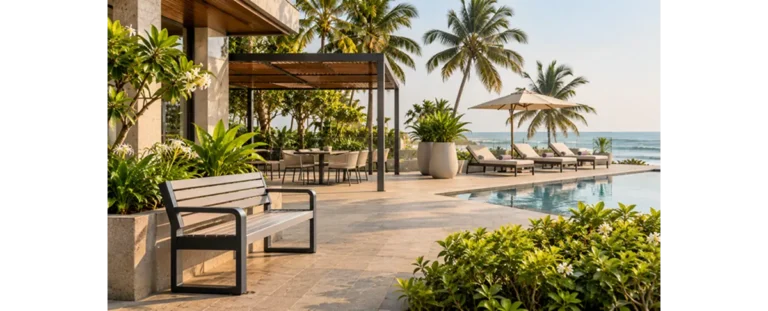
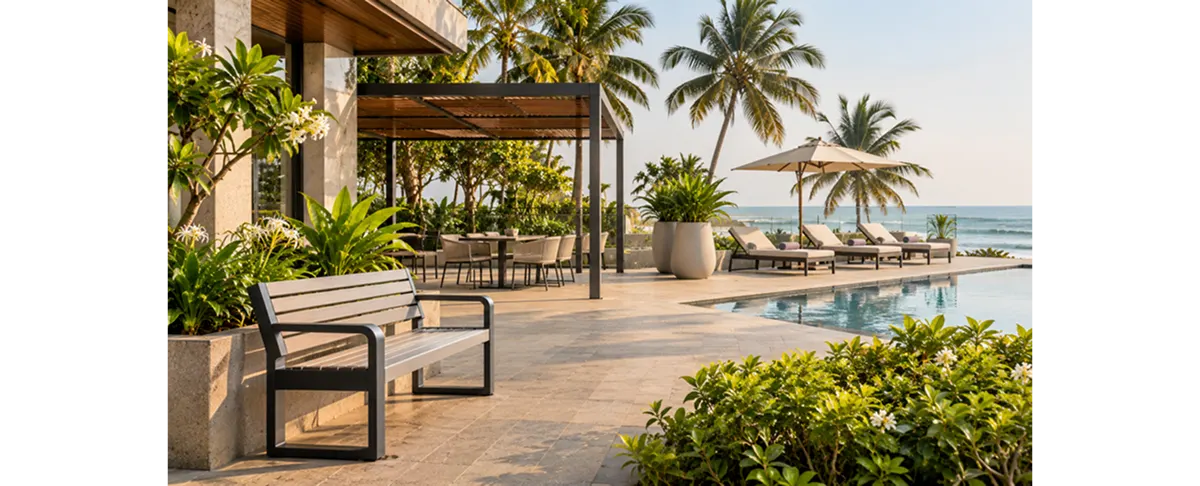
Choosing outdoor furniture for coastal hotels, resorts, residential developments, and public spaces in India comes with unique challenges. The salt-laden air, combined with high humidity levels, relentless sunlight, and heavy seasonal rainfall, can significantly accelerate wear and tear on materials, leading to premature deterioration. For these demanding conditions, investing in weather-resistant outdoor furniture tailored to coastal areas is essential to ensure both durability and aesthetic appeal. Coastal outdoor furniture must not only withstand the elements but also provide comfort and style that complements the environment, enhancing guest experiences while maintaining longevity.
Why Coastal Environments Demand Specialized Outdoor Furniture
Coastal environments subject outdoor furniture to harsh, accelerating wear due to airborne salt, moisture, UV radiation, and continuous exposure. Salt-laden air promotes corrosion, especially on metal components, compromising structural integrity if not properly protected. Moisture penetrates coatings, leading to bubbling, peeling, and eventual substrate decay. UV rays cause fading and material brittleness, while frequent exposure to the elements stresses fasteners, causing rust and loosening over time. These factors increase maintenance demands and reduce furniture lifespans. Ordinary outdoor furniture often lacks the specialized materials and treatments essential for such environments, making it ill-suited for long-term use. Investing in salt-air resistant outdoor furniture with corrosion-resistant designs ensures durability and reduces the extensive upkeep associated with coastal conditions, delivering lasting reliability without sacrificing style or function in exposed seaside locations.
Best Materials for Weather-Resistant Outdoor Furniture
Choosing the right materials for outdoor furniture near the sea is critical to ensuring longevity in harsh coastal environments. Marine-grade aluminum outdoor furniture stands out as lightweight, corrosion-resistant, and excellent for handling salty air when paired with high-quality alloys and protective finishes. Similarly, SS 316 outdoor furniture is preferred over SS 304 due to its superior resistance to chloride-induced corrosion, often ideal for harsher coastal conditions, though it still demands proper design and regular care to prevent pitting or rust spots.
WPC outdoor furniture (Wood-Plastic Composite) is another option, as it doesn’t rust and offers a wood-like aesthetic, though UV stability, thermal expansion, and structural support must be assessed to ensure long-term performance under intense sun and temperature changes. For a more natural look, treated hardwood can work well if you select species with high natural oils like teak and pair it with proper detailing and consistent maintenance.
Mixed-material pieces also require attention to fasteners and galvanic corrosion risks, as incompatible materials can degrade when exposed to coastal conditions. Thoughtfully chosen materials ensure durability, functionality, and style for any seaside setup.
How Indian Manufacturers Improve Corrosion and Weather Resistance
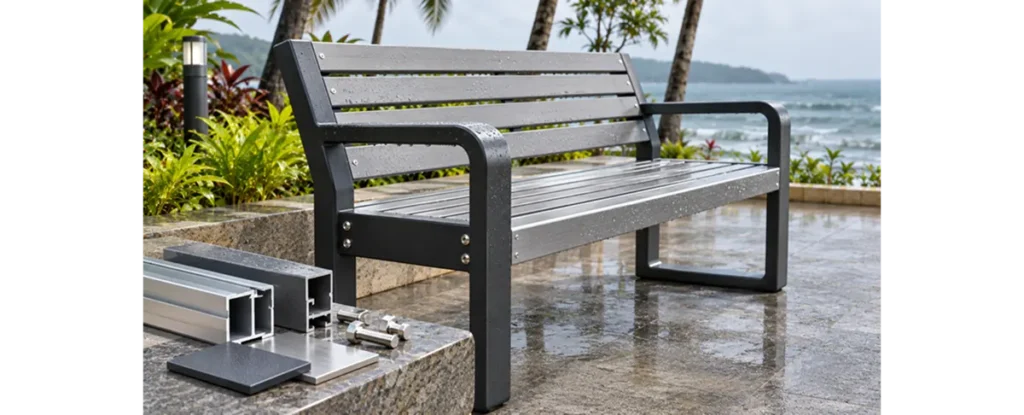
Indian manufacturers are leveraging advanced techniques to produce powder-coated outdoor furniture that lasts in coastal conditions. Surface preparation is critical; thorough cleaning and pretreatment processes, like sandblasting or phosphate coatings, ensure the powder adheres effectively, preventing premature peeling. High-quality powder-coating systems, with appropriate thickness and UV-resistant formulations, add an essential layer of protection against humidity and sun exposure.
Corrosion-resistant fasteners, such as stainless steel or zinc-coated options, are used to prevent rusting at joins. Proper weld finishing, including grinding and sealing, minimizes vulnerabilities in metal frameworks. Additionally, drainage design helps avoid water retention, reducing the risk of internal rusting. Manufacturers also ensure material compatibility in mixed designs to prevent galvanic corrosion.
Buyers should always verify coating specifications, ask about pretreatment methods, and request salt spray or other test data to confirm suitability for coastal exposure. This combination of design precision and process control is key to producing weatherproof outdoor furniture in India.
What Architects and Developers Should Specify for Coastal Projects
When sourcing outdoor furniture for beach resorts or other coastal locations, architects and developers must create detailed, project-specific specifications to ensure longevity and performance. Begin with site exposure; directly exposed beachfront installations demand marine-grade materials like 316 stainless steel, whereas sheltered resort courtyards allow for broader material options. Coating requirements should include UV-resistant finishes and multilayer powder coatings to combat salt and sun damage.
Include structural loading considerations to ensure furniture withstands high winds, alongside drainage design to minimize water retention. Fastening methods should favor corrosion-resistant hardware, while accessible cleaning points simplify upkeep. Define warranty terms tailored to coastal use, and request a maintenance schedule to extend the furniture’s lifespan.
For commercial outdoor furniture procurement, balancing durability with aesthetics ensures these pieces blend seamlessly into coastal environments while holding up against challenging conditions. Thoughtful specifications protect investments and deliver functional, stylish spaces for resort guests.
Urbanland Products — Outdoor Furniture Manufacturing for Coastal Applications
Urbanland Products, an outdoor furniture manufacturer based in Vasai, Maharashtra, specializes in crafting long-lasting solutions for hospitality, residential, and commercial projects. Their wide product range is designed for various outdoor needs, with particular emphasis on material selection to combat the harsh demands of coastal environments. Notably, Urbanland’s expertise in aluminum furniture includes detailed insights into the use of 6063-T6 aluminum, ideal for resisting corrosion in high-salt, humid conditions. For those researching furniture suitable for coastal applications, Urbanland provides technical content that helps decision-makers evaluate material longevity and maintenance needs. Visit their website or explore their blog article on aluminium for coastal furniture to learn more. Among Indian outdoor furniture manufacturers, Urbanland stands out for offering practical knowledge about coastal material selection.
Frequently Asked Questions
What is the best outdoor furniture material for coastal areas in India?
The best material depends on the environment and specific needs. Marine-grade aluminium is lightweight, corrosion-resistant, and low-maintenance, making it ideal for most coastal applications. Stainless steel 316 offers superior strength and chloride resistance for structural pieces, but at higher maintenance costs. Composites, like fiberglass, can withstand salt exposure but may lack the sophisticated aesthetic or adaptability some designs require. Choose based on exposure, durability, and upkeep priorities.
Does powder-coated aluminium resist salt-air corrosion?
Yes, but its effectiveness relies heavily on preparation and application quality. Proper surface treatment, such as chromate conversion, and a high-quality powder coating system are essential. Installation factors, like preventing water traps, and regular cleaning also protect against corrosion. Maintenance matters—clean surfaces resist salt buildup better.
Is stainless steel 316 suitable for beach resort furniture?
Stainless steel 316 resists chloride corrosion much better than SS 304, making it a reliable choice for beach environments. However, it is not entirely corrosion-proof and requires regular cleaning to maintain its appearance and structural integrity. For long-term performance, combining SS 316 with other protective finishes can enhance its durability.
Selecting coastal outdoor furniture requires durable materials, effective corrosion resistance, thoughtful design, and regular care. Partnering with skilled manufacturers ensures long-lasting performance and aesthetic appeal in harsh marine environments.
About the Author